
Preserving Your Coastal Investment: The Essential Guide to Professional Roof Cleaning in Wilmington
For homeowners in the Port City, the roof is far more than just a structural necessity; it is the primary shield against a relentless coastal environment. From the salty Atlantic breezes and intense humidity to the torrential summer downpours, Wilmington properties face a unique set of meteorological challenges that can rapidly degrade even the highest-quality roofing materials. Often, residents notice dark, unsightly streaks or patches of fuzzy green growth and assume it is merely “character” or inevitable aging. However, these blemishes are frequently the signs of active biological infestations that, if left untreated, can eat away at your home’s value and safety. Understanding the nuances of exterior maintenance is key to long-term property health, and for many, the most effective solution starts with seeking professional roof cleaning in Wilmington to stop damage before it goes beneath the surface.
The Invisible Enemy: Understanding the Biology of Roof Decay
In the Cape Fear region, our climate is a double-edged sword. While we enjoy mild winters and beautiful springs, our high dew points and heat create a laboratory-perfect environment for organic growth. If you look at your roof and see black stains, you aren’t looking at “dirt.” You are looking at a living organism.
Gloeocapsa Magma: The Limestone Eater
The most common culprit for those dark vertical streaks on asphalt shingles is a hardy cyanobacteria called Gloeocapsa magma. This bacteria has evolved a dark pigmented outer coating to protect itself from the harsh UV rays we experience in North Carolina.
While it might look like a cosmetic issue, it is actually a structural one. Modern asphalt shingles are manufactured with a limestone filler to add weight and durability. Unfortunately, Gloeocapsa magma feeds on this limestone. As the bacteria colony grows, it literally consumes your roof from the outside in. This leads to:
- Granule Loss: As the limestone disappears, the protective ceramic granules lose their grip and wash into your gutters.
- UV Exposure: Without those granules, the underlying asphalt is exposed to the sun, causing it to dry out, crack, and curl.
- Thermal Absorption: A black-stained roof acts as a heat sink, absorbing massive amounts of thermal energy that transfers directly into your attic.
Moss and Lichen: The Heavy Hitters
While algae (the black streaks) is a slow eater, moss and lichen are aggressive invaders. Moss grows in thick, green carpets that act like sponges. In Wilmington’s humid climate, moss can stay damp for weeks after a single rainstorm. This constant moisture trapped against the shingles leads to rot in the roof decking and can even cause the wood to soften, inviting pests like carpenter ants or termites.
Lichen is a symbiotic relationship between algae and fungus. It forms crusty patches that “root” into the shingle. If a homeowner attempts to scrape lichen off manually, or if a storm rips it away, it invariably takes the top layer of the shingle with it, creating a permanent bald spot on your roof.
The Soft Wash Revolution: Why Method Matters
There is a common misconception that “cleaning” a roof requires the same brute force used to clean a concrete driveway. This is perhaps the most dangerous mistake a homeowner can make. When researching options, the methodology used is more important than the price tag.
The Dangers of High-Pressure Washing
Standard pressure washing relies on sheer force—often upwards of 3,000 PSI—to blast away contaminants. On a shingle roof, this is equivalent to a localized hurricane. High pressure can:
- Instantly Age the Roof: It can strip away 5–10 years of shingle life in a single afternoon by removing the protective granule layer.
- Force Water Upward: Roofs are designed to shed water downward. High-pressure streams can force water up and under the shingles, soaking the underlayment and causing interior ceiling leaks.
- Void Your Warranty: Almost every major shingle manufacturer, including GAF and Owens Corning, explicitly states that pressure washing will void the material warranty.
The Professional Soft Wash Standard
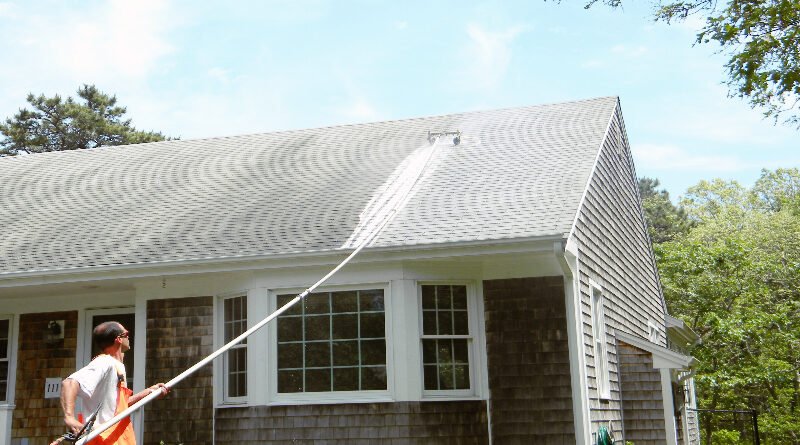
The industry standard for safe roof restoration is “Soft Washing.” This technique involves applying a specialized, biodegradable cleaning solution at a pressure no higher than that of a standard garden hose.
The science behind soft washing is simple: the chemicals do the work so the pressure doesn’t have to. The solution penetrates the porous surface of the shingles, killing the roots of the algae, moss, and lichen. This ensures that the infestation doesn’t just “look” gone—it is actually dead.
Benefits of the Soft Wash Approach:
- Longevity: Because the biological spores are killed, the roof stays clean for significantly longer (often 3 to 5 years) compared to pressure washing.
- Safety: There is no risk of damaging the shingles or blowing out the seals around vents and chimneys.
- Eco-Conscious: Professional teams use specialized equipment to manage runoff, ensuring your Wilmington landscaping and local waterways remain protected.
Financial and Functional Advantages of Maintenance
Maintaining a clean roof is an investment that pays dividends in three specific areas: property value, energy efficiency, and insurance compliance.
1. Curb Appeal and Resale Value
In the competitive Wilmington real estate market, first impressions are everything. A roof often makes up 40% or more of a home’s visible exterior. A stained, moss-covered roof gives potential buyers the impression of a neglected home, often leading to lower offers or requests for a full roof replacement during the inspection phase. A clean roof provides an immediate “facelift” that boosts curb appeal and buyer confidence.
2. Significant Energy Savings
During a Wilmington summer, temperatures can hover in the 90s with a heat index well over 100°F. A roof covered in black algae absorbs significantly more heat than a clean, reflective roof. By removing these dark stains, you restore the shingles’ intended reflective properties. This can lower attic temperatures by as much as 15–20 degrees, drastically reducing the load on your HVAC system and lowering your monthly power bill.
3. Insurance Requirements
In recent years, homeowners’ insurance companies have become more aggressive in their inspections. It is increasingly common for insurers to send out drones or inspectors to view roofs. If they see significant moss or algae growth, they may issue a “notice of non-renewal” or a “force-placed” cleaning requirement. They view organic growth as a sign of imminent failure. Staying ahead of the cleaning prevents these stressful insurance headaches.
When to Schedule Your Cleaning
If you are wondering if it’s time to call in the experts, look for these key indicators:
- Dark “Runoff” Streaks: Usually starting near the peak or around chimney flashings.
- Green Fuzz: Small green tufts appearing between the tabs of the shingles.
- Debris in Gutters: If you see an accumulation of shingle granules (it looks like coarse sand), your roof is being actively eaten by algae.
- The “North Side” Rule: Check the north-facing side of your home; because it receives the least sunlight, it is almost always the first area to develop growth.
Conclusion: A Proactive Approach to Home Care
Your roof is arguably the most important component of your home’s envelope. In a coastal city like Wilmington, allowing nature to take its course on your shingles is an expensive gamble. By opting for professional, low-pressure cleaning, you aren’t just making your house look better—you are performing essential preventative maintenance that secures your financial future and the safety of your family.
Don’t wait until you see water dripping from your ceiling or until an insurance agent sends you a warning letter. A proactive soft wash today can save you tens of thousands of dollars in premature replacement costs tomorrow.
Also visit Digital Global Times for more quality informative content.
