
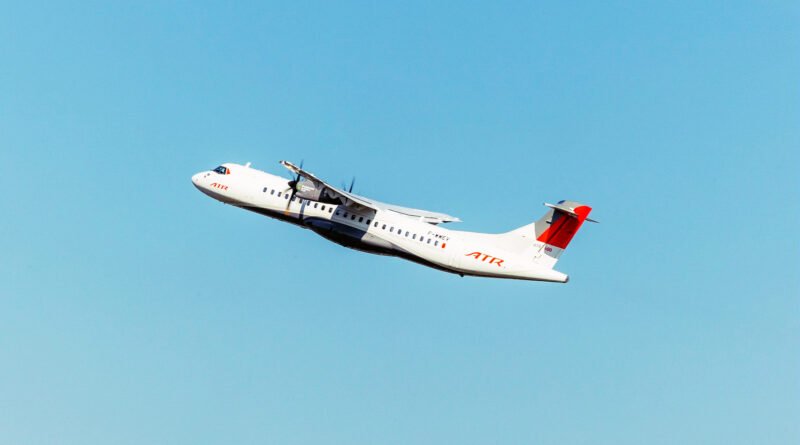
ATR and the Future of Regional Connectivity: Innovation with Purpose
Regional aviation is often underestimated, yet it is an essential part of economic cohesion and social inclusion. For many communities, especially those far from major hubs, air links are not optional, but truly fundamental. Since 1981, many companies have focused on this segment of the market, but not all have been genuinely involved in innovating the field.
Let’s have a look at ATR, delivering aircraft to more than 200 airlines across over 100 countries and helping shape a model of connectivity built around efficiency, reliability, and long-term responsibility.
Purpose-built for regional realities
One of ATR’s many investments has been in turboprops. Unlike aircraft designed primarily for dense trunk routes, these are engineered for the regional sector and more demanding operating conditions. For example, the ATR 42-600, 72-600, and 72-600F freighter aircraft are optimised to serve secondary cities, island communities, and mountainous regions where infrastructure can be limited. Thanks to their ability to operate from short or less prepared runways, they broaden route possibilities and allow airlines to maintain connections that might otherwise be commercially unviable.
Efficiency is central to this model. Compared with similarly sized regional jets, ATR aircraft consume 45% less fuel and emit 45% less CO2 compared to similar size jets, a structural advantage rooted in turboprop technology. That performance supports both economic sustainability for operators and alignment with evolving climate expectations.
A structured approach to climate commitments
A conscious approach to regional connectivity cannot fail to include environmental responsibility. This is why ATR set a goal: net-zero carbon emissions by 2050. And as near-term achievements, greenhouse gas reduction targets validated by the Science Based Targets initiative (SBTi). These policies are in line with the Paris Agreement and aim to integrate product development, operational improvements, and collaboration across the aviation ecosystem.
Combining evolution to sustainability is the ATR EVO concept: designed with hybrid-ready propulsion, improved aerodynamics, and full Sustainable Aviation Fuel (SAF) capability, EVO concept will aim to deliver double-digit reductions in fuel burn and maintenance costs while maintaining the operational flexibility that defines regional turboprops.
Advancing SAF integration
Talking about SAF, Sustainable Aviation Fuel is expected to contribute approximately 65% of the CO2 reductions required to reach the aforementioned net-zero by 2050. ATR has been working on SAF since June 2022, when the company completed the world’s first flight of a regional commercial aircraft powered by 100% SAF in both engines, demonstrating operational viability.
Later, in August 2023, all ATR production test flights operated with a 30% SAF blend, saving nearly four tonnes of CO2 per flight with the aim of certifying the entire ATR fleet for 100% SAF compatibility by 2030, aligned with the development of international fuel standards.
Connectivity as a long-term commitment
Regional mobility extends beyond aircraft performance; it is about enabling access to markets, healthcare, education, and opportunity. The combined investments in technology, structured climate targets, and close collaboration with airlines and industry partners help ATR reinforce the principle that innovation in aviation must serve a broader purpose. Innovation is only beneficial if it serves the people and the planet.
Also visit Digital Global Times for more quality informative content.
