
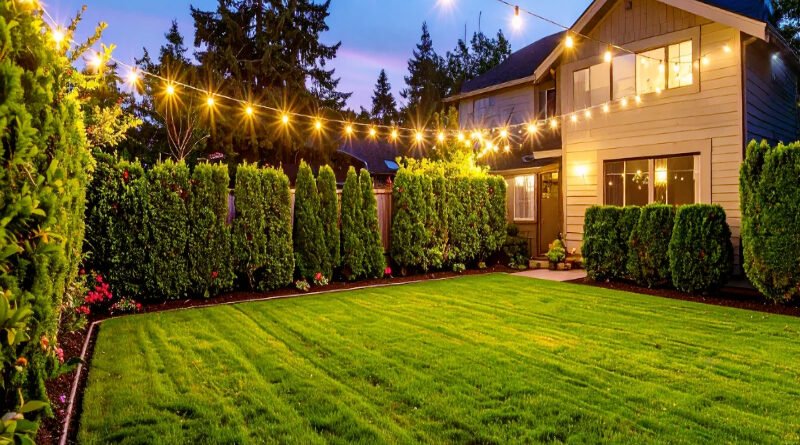
The Art of the Glow: Deciphering the Magic of Neighborhood Holiday Curb Appeal
The transition from a standard street to a winter wonderland is one of the most enchanting shifts in our annual social calendar. We’ve all experienced that moment: driving through one neighborhood where the lights feel like a warm, intentional hug, only to turn the corner into another that feels like a chaotic jumble of competing brightness. It isn’t always about who spent the most money or who has the largest inflatable Santa; rather, it’s a subtle interplay of architecture, community psychology, and visual discipline.
The Architectural Blueprint of Festivity
The foundation of a visually stunning holiday display actually begins long before the first string of lights is untangled. The most “Instagrammable” streets often share a common secret: architectural consistency. When a neighborhood features a row of Craftsman-style homes or a sweep of classic Georgians, the holiday decor has a natural “grid” to follow.
Consistent rooflines allow the eye to travel smoothly from one house to the next, creating a rhythmic pulse of light that feels intentional. In neighborhoods with varying heights and mismatched styles—think a 1970s ranch next to a modern farmhouse—the visual “noise” can make even the most beautiful decorations feel disjointed. Homeowners in these areas have to work twice as hard to create a sense of flow, often relying on shared elements like matching wreaths or a specific color temperature of light to bridge the gap between different structural eras.
The Psychology of the Block: Cohesion vs. Competition
Why do some streets seem to move in perfect synchronization? It often comes down to the social dynamics of the block. In many close-knit communities, there is an unspoken “style guide.” If the first three houses on a cul-de-sac opt for warm white LEDs and traditional evergreen garlands, the fourth house is statistically more likely to follow suit. This isn’t just peer pressure; it’s a form of community branding.
Conversely, we’ve all seen the “Christmas Arms Race.” This happens when neighborly competition takes over. One house adds a laser light projector, so the neighbor adds a fifteen-foot inflatable reindeer, and by mid-December, the street looks less like a Victorian village and more like a neon-soaked carnival. While individual homes might be impressive, the neighborhood as a whole loses that sophisticated, cohesive “glow” that makes people pull over their cars to admire the view.
The “Pro” Factor: Precision and Execution
There is a growing trend toward professional-grade displays that move beyond the DIY aesthetic. Many homeowners who prioritize a high-end look are now looking for Christmas light installers in York and other areas where curb appeal is a point of pride. Professional installers don’t just hang lights; they map out the home’s “visual bones.”
Professionals focus on:
- Custom-Cut Strands: Avoiding the unsightly “dangles” of extra wire between windows.
- Color Temperature Matching: Ensuring every bulb across the roofline, trees, and walkways emits the exact same 2700K or 3000K warm glow.
- Safety and Symmetry: Using specialized clips that keep lights perfectly straight on gutters and shingles, preventing the “wavy” look that often plagues DIY setups.
While the “human touch” of a slightly crooked string of lights has its own nostalgic charm, the neighborhoods that stop traffic are usually those where a significant portion of the residents have invested in this level of precision.
Color Theory and the Power of Restraint
One of the most significant factors in neighborhood aesthetics is color palettes. There is a reason the “warm white and red” or “all-white” neighborhoods feel more upscale. Monochromatic schemes allow the architecture of the homes to remain the star of the show.
However, color can be done beautifully when it’s coordinated. A neighborhood that agrees on a “jewel tone” theme or a “vintage multi-color” vibe feels like a curated gallery. The visual “clash” happens when a house using 5000K (cool, blue-ish white) lights sits directly next to one using 2700K (warm, yellow-ish white) lights. This creates a jarring contrast that can make even expensive decorations look “off.”
Landscaping: The Unsung Hero of the Holidays
We often focus on the houses themselves, but the landscaping acts as the “connective tissue” of a neighborhood. Streets with mature trees that are wrapped from trunk to branch create a canopy of light that unifies the area. In newer developments where trees are still saplings, homeowners often use “ground-level” lighting—lining flower beds and walkways—to create depth.
When a neighborhood coordinates its landscaping lights—perhaps by all wrapping their mailbox posts or using identical lighted spheres in their treesit creates a horizontal line of sight that ties the entire block together. This creates a sense of “place” that transcends individual property lines.
Conclusion and Final Thoughts
Ultimately, the neighborhoods that look the “best” during the holidays are those that treat their street as a single, shared canvas rather than a collection of individual galleries. It’s a delicate balance of architectural rhythm, social cohesion, and a shared commitment to quality. Whether it’s through the help of professional installers or a simple handshake agreement over the fence to stick to a warm-white theme, the most beautiful holiday displays are those that foster a sense of unity.
The magic of a perfectly lit street isn’t just in the wattage—it’s in the way it makes us feel. It’s the visual representation of a community that cares about its surroundings and about each other. As we move into future holiday seasons, the trend toward thoughtful, coordinated, and professionally executed displays suggests that our appreciation for “neighborhood-level” beauty is only growing. After all, a single bright house is a decoration, but a beautifully lit neighborhood is a memory.
Article written by Aamir Dildar
Prioritizing health and wellness overseas involves investing in comprehensive emergency travel insurance for older adults.
