
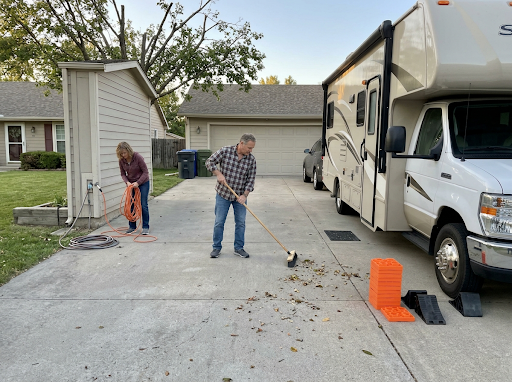
Getting Your Driveway Ready for Overnight Guests With an RV
It’s nice to have family stay over, and a good way to do that is an RV, but an RV requires quite a bit of preparation. You first have to consider where you’re going to park it. RVs are pretty big and need enough space, as well as a place that is solid, and enough access to all the utility services. In addition to space, you have to be cognizant of all your neighborhood’s parking regulations. You also have to think about where all your regular vehicles are going to be moving.
Having everything organized prior to their arrival can avoid a lot of problems. Preparing the space by making sure the driveway is free and clear and the electrical space is taken care of helps the guests, as well as maintaining your space outside and protecting the driveway.
Check the Available Parking Space
Some recreational vehicles (RVs) take up a lot more space than your everyday car. The reason is they vary significantly in their length and width. Some come with features like slide-outs that make the unit bigger once it is parked. It’s smart to measure your driveway, compare the results with your RV dimensions and leave space to open the doors and walk around it. Trees, roof edges and overhangs also need to be considered when thinking about height. You should never assume just because a car can park there, so can an RV.
Review Local Parking Rules
Local bylaws regarding RVs and driveways vary. Check your neighborhood’s policy. Some areas allow short term parking, others do not. Restrictions can also apply to vehicle size and where an RV can be parked. If you live in a planned community, make sure to read the CC&Rs for your HOA. Those documents often spell out restrictions on parking an RV in a community.
Prepare the Parking Spot
A professional cleaning might get rid of difficult stains on the concrete and paved areas. For homeowners who want residential power washing in Plainfield, IL, you might think of having power washing done for your parking area before accommodating the RV. This way, any accumulated grime would be cleaned up, and the driveway would become cleaner.
Plan Proper Electrical Connection
RVs usually require electrical power when they park at home overnight. The visitors might need a power supply for lights, a fridge, chargers, and other gadgets. Nevertheless, connecting an RV to the electricity inside your house needs some precautions. Before accommodating your guests, find out the electricity needs of the RV and its specifications. You should not have any problems because the connection might not be suitable for that RV.
Clear Up the Paths
The RV parking spot should not be near the entrance, the garage door, or the paths that family members usually use. You still need to have access to your car and outside areas. Make sure that there is a safe distance between the RV and the house. You will need to get rid of all tools, toys, containers, Remove garden tools, toys, bins, and other items from the area. Make sure guests can walk safely, even at night.
Protect Your Garage and Vehicle Access
An RV should not interfere with the regular use of your garage. Homeowners may still need to park their cars, open storage doors, or move outdoor equipment. Before the RV arrives, decide where every vehicle will stay. Make sure the RV does not block the garage entrance. Leave enough room for cars to enter and exit without difficult turns.
Consider Water and Waste Arrangements
The presence of an RV should not hinder the normal usage of your garage. Some homeowners may want to park their cars, open storage doors, or work with their equipment outdoors. Think about where each of the vehicles would park even before the RV arrives. Ensure that the RV does not obstruct the garage opening. It is important to have sufficient space for the cars to park and leave the garage without making hard turns.
Trim Nearby Trees
Look out for hanging branches in the parking lot. Cut back any low limbs that could hit the RV. Make sure there is sufficient room for the automobile to enter and park. RVs are taller than standard vehicles, and even a small branch could cause damage. If they are in the way, cut them off. Remove any dry branches that may fall while parking.
Sweep and remove any fallen leaves, twigs, and garden debris. Review the turning space also. Large RVs demand additional space for maneuvering around curves. Do not plant trees or shrubs at the gate. Check any tree limbs around any outdoor lights, and trim any if necessary.
Complete a Final Driveway Safety Check
Inspect your driveway before the arrival of the RV. Inspect the following:
- Parking Area:
- Electrical ties:
- Walking Ways:
- Garage Entry:
- Exterior Lighting:
- Drainage:
- Community Standards:
FAQs
What is the best time of year to fix up my driveway?
If possible cook in advance of time. At least one day before.
Can an RV ruin my driveway?
Yes, surfaces can be soft and will be damaged by the heavy RV.
Do I need to let my neighbours know I am staying in an RV?
Yes. Giving short alerts can help avert any parking difficulties.
Where will my RV be parked?
Choose a flat surface so it will not block doorways or walkways.
How do I manage waste from my RV on an overnight trip?
Remind your guests to use designated RV waste disposal sites.
Conclusion
You can enjoy your time in an RV. It is helpful in raising your happiness. It could be fun to play a role in the group. Everyone can have a personal area in the RV. It is required that you be ready for the party. Some steps should be examined. Parking is the main part of that. RVs have more room than others. There should not be any hurdles. The barrier includes trees or limbs. Think about the overall load of the RV. Make space for doors to open.
