

How to Keep Apples From Turning Brown?
Freshly sliced apples look crisp, juicy, and inviting. Yet within minutes, they start turning an unappealing shade of brown. If you pack apple slices in lunchboxes, prep fruit platters for guests, or run a food blog, you’ve probably faced this problem countless times.
The good news is simple: browning is natural, harmless, and easy to prevent. Once you understand why it happens and how different prevention methods work, you can keep apples looking fresh for hours—or even days. In this people-first guide, I’ll walk you through practical, science-backed techniques that actually work in real kitchens.
Why Apples Turn Brown After Cutting
When you slice an apple, you damage its cell walls. That damage exposes enzymes and natural compounds to oxygen in the air. A specific enzyme called polyphenol oxidase reacts with oxygen and forms brown pigments. This process is called enzymatic browning.
It’s similar to what happens with bananas, avocados, and potatoes. The fruit isn’t spoiled; it’s simply undergoing a chemical reaction. However, appearance matters. Brown slices look old, dry, and less appetizing—especially for kids’ lunches, party trays, and food photos.
Is Browning Harmful or Unsafe?
No. Brown apples are safe to eat.
Browning affects appearance and slightly alters flavor and texture over time, but it does not make the fruit dangerous. The nutrients remain largely intact. However, prolonged exposure to air can slowly reduce vitamin C levels and moisture.
Food safety authorities such as the United States Department of Agriculture confirm that enzymatic browning is a quality issue, not a safety issue. So you’re dealing with freshness and presentation—not risk.
Method 1 — Lemon Juice (Most Popular and Reliable)
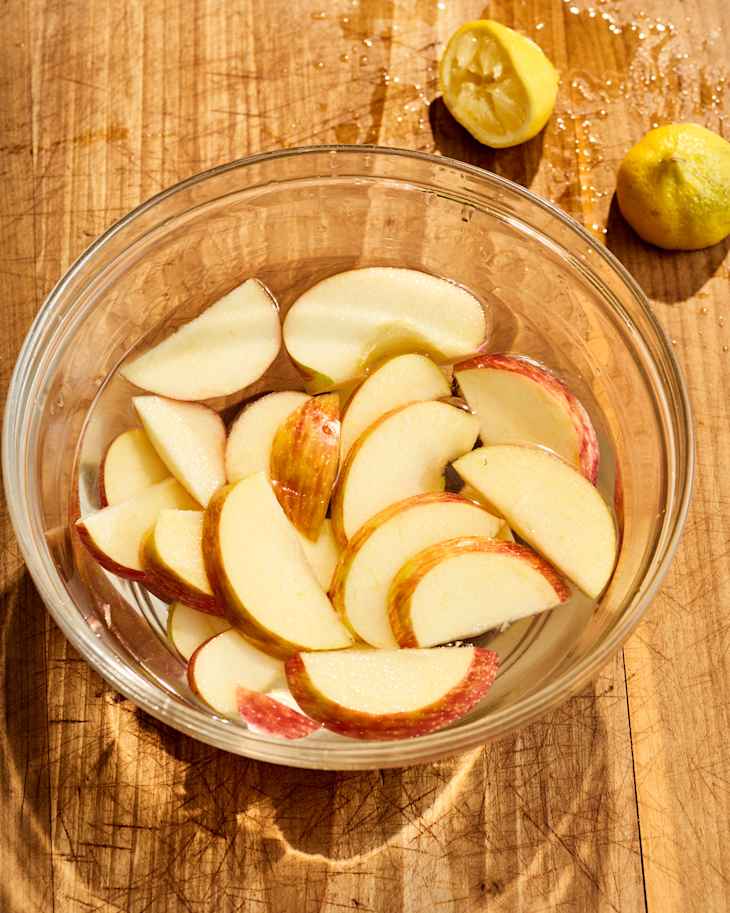
Lemon juice is the go-to solution for a reason: it works fast and uses ingredients most kitchens already have. The acidity slows the enzyme reaction, while vitamin C (ascorbic acid) acts as an antioxidant that blocks browning.
You can apply it in two easy ways. First, squeeze fresh lemon juice and lightly brush it on apple surfaces. Second, mix one tablespoon of lemon juice into one cup of water and soak slices for 3–5 minutes. Both methods keep apples fresh for several hours.
Taste tip: If you’re worried about sourness, dilute the solution more. A mild citrus note often complements sweet apple varieties.
Method 2 — Salt Water Soak (Surprisingly Effective)
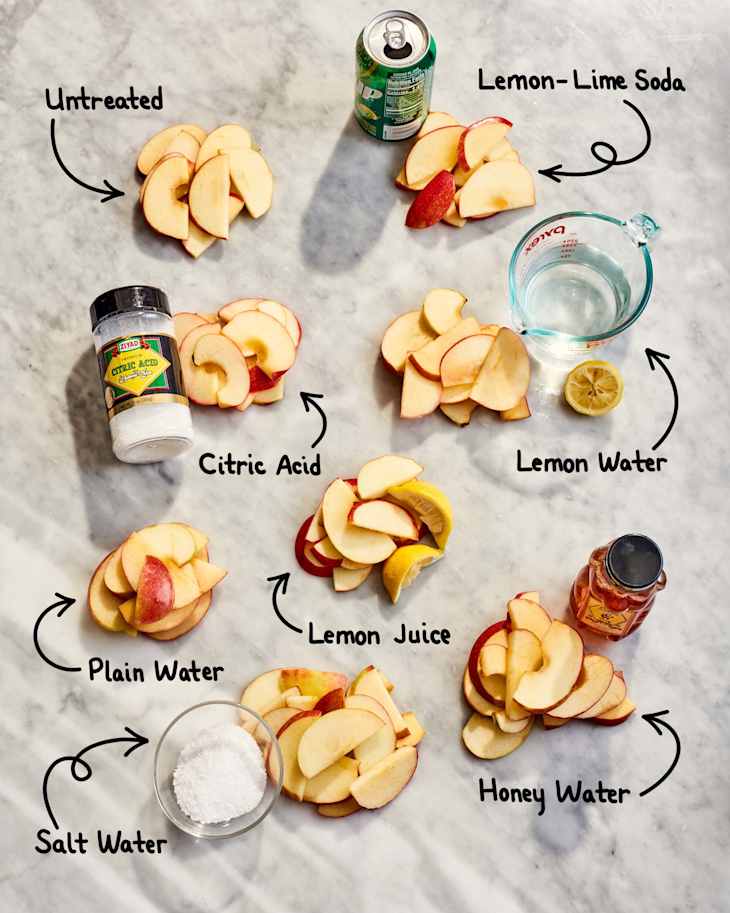
Salt water slows oxidation by limiting oxygen interaction at the fruit’s surface. While it sounds unusual, it’s one of the most effective low-cost methods.
Mix ½ teaspoon of salt in one cup of water. Soak apple slices for 3–5 minutes, then rinse lightly with fresh water. The browning reaction slows significantly, and you won’t taste salt if you rinse properly.
This method works especially well for school lunches and meal prep because it preserves color without altering texture.
Method 3 — Honey Water Treatment
Honey contains natural compounds that slow enzymatic browning. It also adds a gentle sweetness that pairs nicely with tart apple varieties.
Stir 2 tablespoons of honey into 1 cup of warm water until dissolved. Let the mixture cool, then soak slices for 3–5 minutes. The protective effect can last for several hours.
Parents often prefer this method because it uses natural ingredients and improves flavor without refined sugar.
Method 4 — Carbonated Water (Quick Party Fix)
Carbonated water slows browning because dissolved carbon dioxide reduces oxygen exposure. It’s simple and works well when you’re preparing fruit platters for gatherings.
Just soak apple slices in plain sparkling water for 3–5 minutes. No rinsing needed. The taste remains neutral, and presentation stays clean.
While the effect doesn’t last as long as acidic solutions, it’s convenient when lemons or honey aren’t available.
Method 5 — Plastic Wrap and Air Control
Oxygen triggers browning, so limiting air exposure helps. If you’re storing cut apples without soaking, wrap them tightly.
Press plastic wrap directly onto the apple surface so no air pockets remain. You can also store slices in airtight containers or zip-lock bags with the air squeezed out.
This approach works best when combined with another method like lemon or salt water. On its own, it slows browning but doesn’t stop it completely.
Method 6 — Refrigeration Slows the Reaction
Temperature affects chemical reactions. Cooler environments slow enzyme activity, which delays browning.
Store treated apple slices in the refrigerator at or below 4°C (40°F). Use airtight containers to reduce airflow and moisture loss. Proper storage keeps slices crisp longer.
Food storage guidelines from the U.S. Food and Drug Administration recommend refrigeration for cut fruits to maintain quality and safety.
Which Apple Varieties Brown the Slowest?
Some apples resist browning better than others due to lower enzyme activity and higher natural acidity.
Best slow-browning choices:
-
Granny Smith
-
Fuji
-
Pink Lady
-
Honeycrisp
Faster-browning varieties:
-
Red Delicious
-
Golden Delicious
-
Gala
If presentation matters—like fruit trays or food photography—choosing the right variety reduces prep stress.
Commercial Anti-Browning Products (When You Need Convenience)
Pre-packaged fruit mixes and food-safe preservatives are available in supermarkets. These products often contain ascorbic acid and calcium salts that maintain firmness and color.
They’re useful for large gatherings, catering, and bulk meal prep. Always check ingredient labels if you’re serving guests with dietary restrictions.
Professional kitchens and food service providers commonly use these solutions for consistent results and longer shelf life.
Common Mistakes That Cause Faster Browning
Many people unintentionally speed up oxidation. One common mistake is slicing apples too early without treatment. The longer they sit exposed, the faster they discolor.
Another issue is using too little solution. A quick splash of lemon water won’t protect the entire surface. Proper soaking or coating ensures even coverage and better results.
Also, avoid warm storage areas. Heat accelerates enzymatic activity and moisture loss.
Best Method Based on Your Situation
Different needs call for different solutions.
-
Lunchboxes: Salt water soak + airtight container
-
Party platters: Lemon water or carbonated water
-
Kids who dislike sour flavors: Honey water
-
Meal prep: Lemon water + refrigeration
-
No liquids available: Tight wrapping + cold storage
Choosing the right method saves time and keeps fruit appealing.
How Long Do Treated Apples Stay Fresh?
Effectiveness varies by method and storage.
-
Lemon or salt water: 6–12 hours refrigerated
-
Honey water: 6–10 hours
-
Carbonated water: 2–4 hours
-
Airtight storage only: 1–3 hours
For best texture and flavor, consume within 24 hours.
Final Thoughts
Keeping apples fresh isn’t complicated once you know what causes browning. A little preparation goes a long way. Simple kitchen ingredients—lemon juice, salt, honey, or sparkling water—can preserve color and texture with minimal effort.
Whether you’re packing lunches, prepping recipes, or arranging fruit displays, these practical techniques help you serve apples that look as good as they taste.
