
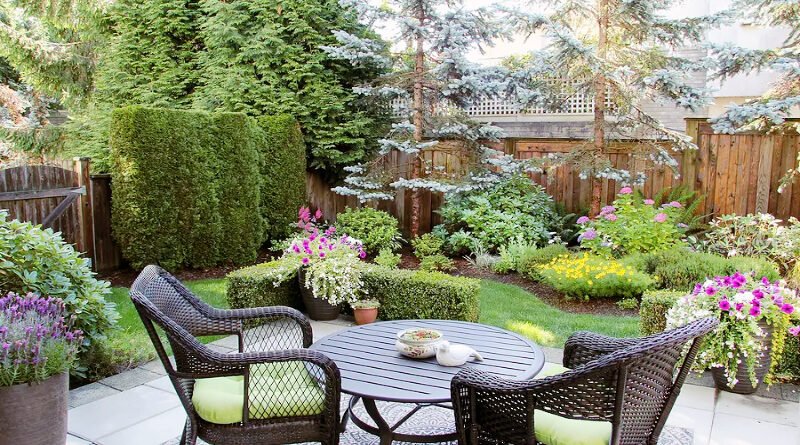
The Art of the Airy Acre: Designing a Backyard That Still Feels Open With Large Features
A backyard should be a sanctuary, not a storage unit for outdoor amenities. Many homeowners dream of adding grand features—a sprawling outdoor kitchen, a custom pergola, or a luxury pool—only to fear that these additions will swallow their green space whole. The secret to a successful landscape design lies in the balance between functionality and “negative space.” By prioritizing sightlines, verticality, and strategic zoning, you can integrate massive, high-impact features while maintaining the breezy, expansive feel that makes an outdoor space so refreshing.
The Paradox of Plenty: Why Large Features Often Cramp a Yard
The impulse when designing a backyard is often to push every major feature to the center or to line them up against the house like furniture in a showroom. This is the fastest way to make a half-acre feel like a closet. When we add large elements, we aren’t just taking up physical square footage; we are altering the way the eye moves across the landscape.
A “cramped” feeling usually stems from “visual clutter”—when the eye has no clear place to rest or no path to follow. To keep a yard feeling open, we must treat large features not as obstacles, but as anchors that define specific zones while leaving “breathing room” between them.
Spatial Planning: The “Rule of Thirds” for Landscapes
In professional landscaping, successful spatial planning often mirrors interior design. You wouldn’t fill a living room from wall to wall with sofas; you leave walking paths and “dead space” to emphasize the furniture you do have.
In the backyard, try to follow a modified version of the rule of thirds. Dedicate one-third of the space to your “hardscape” (the kitchen, the fire pit, the patio), one-third to “softscape” (grass, garden beds, trees), and one-third to open transition zones. These transition zones are the “hallways” of your yard. By keeping these areas clear of permanent structures, you create a sense of infinite flow, even if the actual acreage is modest.
The Vertical Advantage: Using Height to Save Width
One of the most effective ways to keep a yard feeling open is to build “up” rather than “out.” Take the pergola, for example. A pergola provides shade and architectural interest, but because it is open-sided and roofless, it doesn’t block the view of the trees or the sky. It defines a “room” without building “walls.”
When planning an outdoor kitchen, avoid massive, wrap-around islands that act as barricades. Instead, consider “linear” kitchens or “L-shaped” configurations that hug the perimeter of a patio. This keeps the center of the yard open for activities, sightlines, and movement. By keeping the bulk of your heavy features toward the edges or corners of the yard, you preserve the “great lawn” effect in the center.
Proportionality and the “Anchor” Feature
Every yard needs a focal point, but that focal point must be in proportion to the surrounding space. If you are considering a major water feature, for instance, the layout becomes the most critical factor. A massive rectangular pool placed dead-center in a small square yard leaves only narrow, unusable strips of grass around the edges.
However, if you work with experts—such as the various local pool companies in Ellicott City you can explore custom shapes like “freeform” or “plunge” pools that tuck into corners or follow the natural contours of your land. These professionals can help you determine the “setback” requirements while ensuring the pool doesn’t dominate the entire visual field. When a pool is integrated with the natural slope of the yard or framed by low-profile stone decking, it feels like a natural part of the horizon rather than a giant blue block taking up space.
Visual Flow: The Power of Sightlines
A backyard feels “open” when you can see from one end to the other without your gaze being interrupted by a solid wall. To achieve this while still having large features, use “transparent” or “low-profile” materials.
- Glass Railings: If your deck or pool area requires a safety barrier, glass panels keep the view unobstructed.
- Open-Flame Fire Pits: Instead of a massive stone fireplace that acts as a wall, opt for a low-profile fire table. You get the warmth and ambiance without losing the view of the sunset.
- Strategically Placed Flora: Use ornamental grasses or “airy” trees like Japanese Maples. They provide texture and “screening” without creating a solid green wall that closes in the space.
Zoning with Purpose
Instead of one giant patio that holds everything, consider “satellite” zones. Place the fire pit in a far corner under a tree; put the dining area near the back door; tuck the hot tub behind some tall grasses. By scattering these features, you force the eye (and the guest) to move through the yard. This movement creates a psychological sense of vastness. When you have to “walk to the fire pit,” the yard feels larger than if the fire pit were just three feet from the dining table.
The Role of Lighting in Expanding Space
As the sun goes down, a backyard can quickly feel like it’s shrinking as the perimeter disappears into darkness. Lighting is a powerful tool for maintaining an open feel at night. Use “uplighting” on the trees at the very back of your property line. By illuminating the boundaries, you push the “walls” of the yard back, making the space feel just as expansive at 9:00 PM as it does at noon. Avoid bright, “stadium-style” floodlights, which flatten the space; instead, use layered, low-voltage lighting to create depth and shadow.
Conclusion and Final Thoughts
Designing a backyard with large features is a delicate dance between ambition and restraint. The goal is to create a space that offers all the luxury of a modern resort without sacrificing the natural, airy essence of the outdoors. By focusing on sightlines, choosing proportional features, and leaving intentional gaps of “nothingness,” you can turn even a standard suburban lot into an expansive retreat.
Remember, a backyard doesn’t need to be empty to feel open; it just needs to be organized. Whether you are installing a grand pergola or collaborating with professionals on a complex pool layout, always keep the “horizon” in mind. When you design with the view as your priority, your large features won’t just sit in your yard—they will enhance it, creating a balanced landscape that feels both curated and infinitely wide.
Article written by Amir Dildar
