
Tech Giants Envision Future Beyond Smartphones
Tech giants envision future beyond smartphones, and this shift is no longer a distant concept—it’s already unfolding. Over the past decade, smartphones have dominated how we communicate, work, shop, and entertain ourselves. However, the future beyond smartphones is now taking shape as companies like Apple, Google, and Meta invest heavily in AI-powered devices, augmented reality glasses, and wearable technology ecosystems.
As we move into the post-smartphone era, the idea of relying on a single handheld device is gradually being replaced by connected devices, immersive experiences, and AI-first ecosystems. This transformation is not just about technology—it’s about redefining human-computer interaction in a way that feels more natural, intuitive, and seamless.
Why Smartphones Are Reaching Their Limits
Market Saturation and Innovation Slowdown
The global smartphone market has reached a point of market saturation. With over 1 billion+ users worldwide, nearly everyone who needs a smartphone already owns one. As a result, innovation has slowed down, with most upgrades offering only incremental improvements.
Manufacturers now focus on minor upgrades like better cameras or slightly faster processors, rather than revolutionary changes. This signals a shift toward next computing platforms.
Screen Fatigue and Digital Overload
People now spend an average of 6–7 hours daily on screens, leading to increased awareness around digital minimalism. Users are actively seeking ways to reduce screen time, creating demand for hands-free computing and screenless experiences.
Fact: Studies show that excessive screen time contributes to fatigue, reduced focus, and mental stress.
Hardware Plateau
Smartphones have reached a hardware plateau, where improvements are no longer transformative. This is one of the strongest signals that the smartphone era is ending, paving the way for future devices replacing smartphones.
Tech Giants Leading the Post-Smartphone Revolution
Apple’s Spatial Computing Vision
Apple is focusing on spatial computing technology, blending digital and physical environments. Their approach aims to replace screens with immersive digital overlays, making computing more intuitive.
Meta’s Metaverse Strategy
Meta is investing in the metaverse, a virtual ecosystem built on extended reality (XR). Their goal is to create immersive experiences where users interact in digital spaces rather than on screens.
Google’s AI-First Ecosystem
Google is leading the charge in AI-powered devices and ambient computing. Their vision focuses on context-aware computing, where technology anticipates user needs without manual input.
Microsoft, Amazon, and NVIDIA’s Contributions
Companies like Microsoft, Amazon, and NVIDIA are building the backbone of this transformation through cloud computing, edge computing, and AI infrastructure.
AI-Powered Devices Replacing Smartphones
Rise of AI Assistants and Ambient Computing
The future lies in AI assistants that operate through voice interfaces and real-time interaction. These systems use machine learning (ML) to provide personalized AI experiences.
Imagine a device that:
- Schedules your day automatically
- Answers queries instantly
- Adapts to your behavior
This is the essence of ambient computing.
AI-Native Devices and Invisible Computing
A major shift is happening toward AI-native devices and invisible computing. These devices remove the need for screens entirely.
Key Features:
- Screenless computing
- Context-aware automation
- Ubiquitous computing environments
Quote: “The best technology is invisible—it works without you noticing it.”
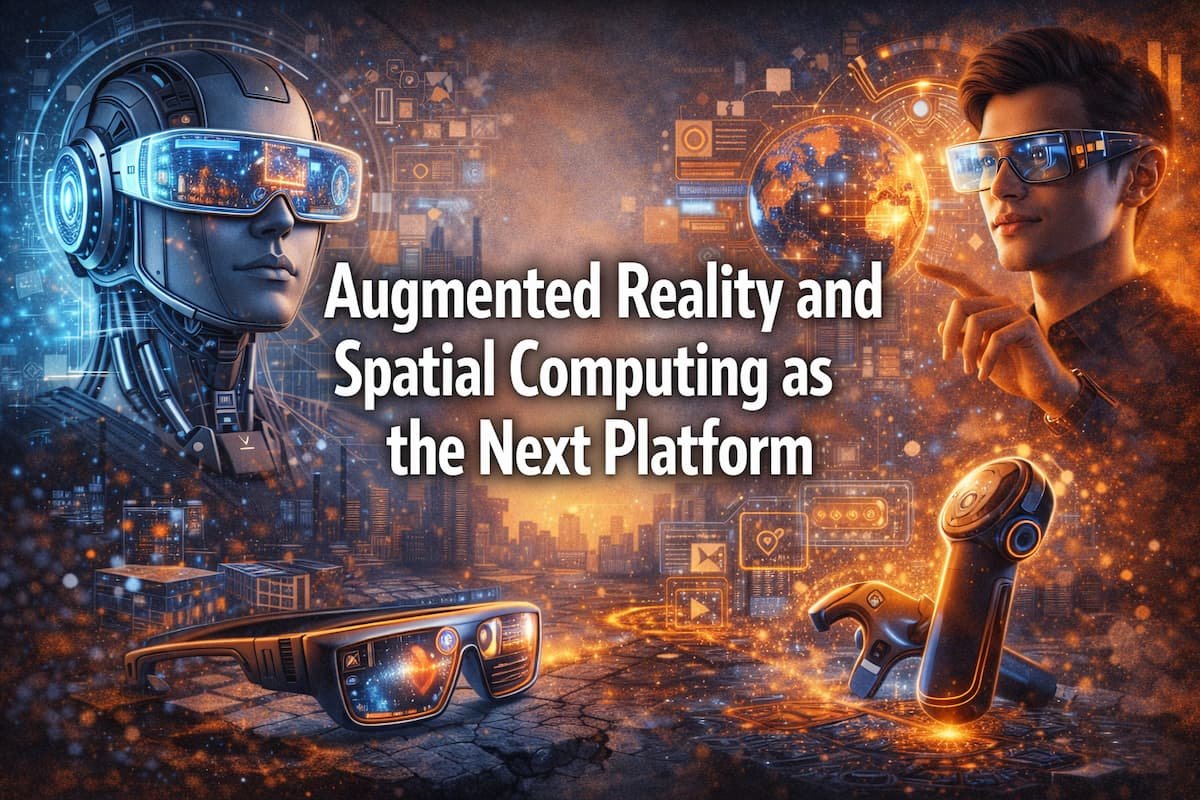
Augmented Reality and Spatial Computing as the Next Platform
Smart Glasses and AR Interfaces
Augmented reality (AR) glasses are emerging as strong candidates to replace smartphones. These devices overlay digital information directly onto the real world.
Mixed Reality and Immersive Experiences
Virtual reality (VR) and mixed reality devices create immersive digital experiences that go beyond traditional screens.
Spatial Computing Ecosystem
Spatial computing combines:
- Physical environment
- Digital interfaces
- Real-time data
This creates a seamless digital ecosystem where users interact naturally.
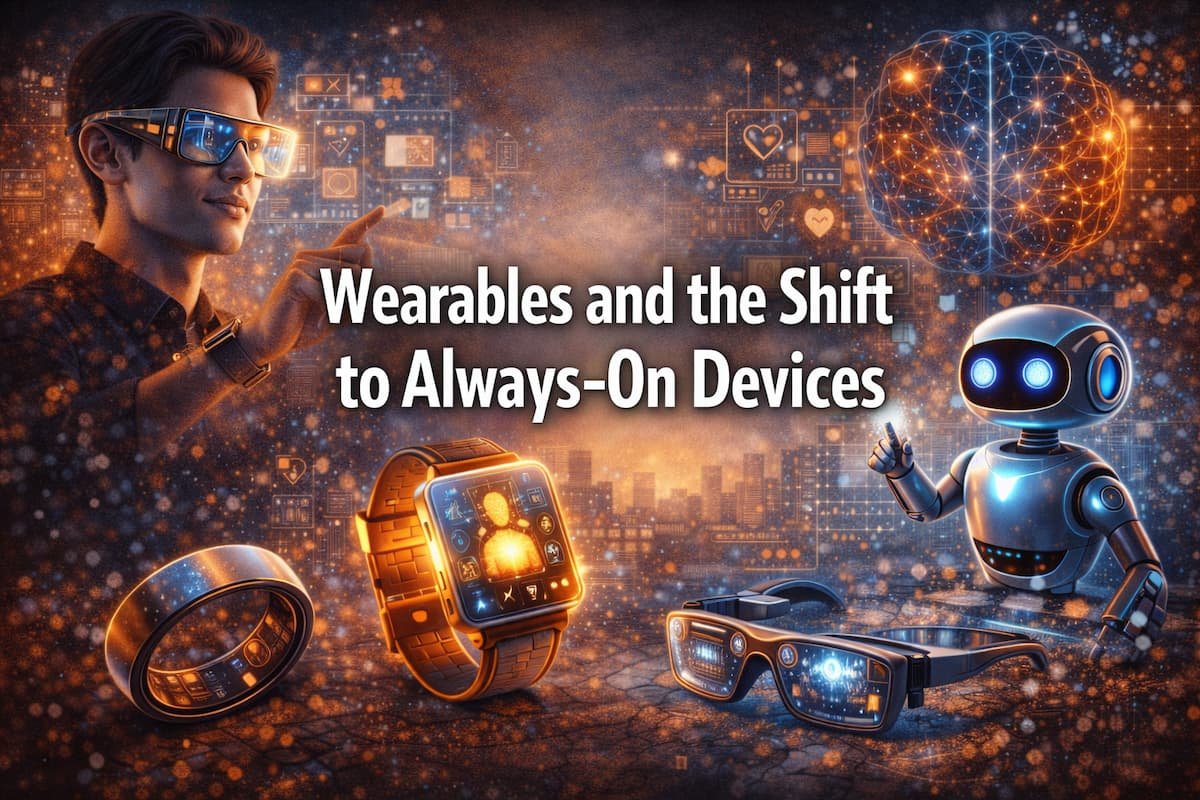
Wearables and the Shift to Always-On Devices
Smartwatches as Primary Devices
Wearable technology is evolving rapidly. Smartwatches are becoming powerful enough to act as primary computing devices.
Connected Devices and Smart Ecosystems
The future is not one device—it’s a network of connected devices.
Examples:
- Smart glasses
- Wearable health trackers
- AI assistants
Device Convergence
One major trend is device convergence, where multiple technologies combine into a single ecosystem.
Tech Giants Envision Future Beyond Smartphones
What is Brain-Computer Interface (BCI)?
Brain-Computer Interfaces (BCI) allow direct communication between the brain and machines.
Hands-Free and Thought-Based Computing
This technology enables:
- Thought-based commands
- Hands-free interaction
- Faster response times
Challenges
- Privacy concerns
- Ethical issues
- High development costs
Challenges in the Post-Smartphone Era
Key Barriers
| Challenge | Impact |
|---|---|
| High Cost | Limits adoption |
| Privacy Risks | Data concerns |
| Slow Adoption | User hesitation |
| Infrastructure | Requires upgrades |
Despite innovation, technology adoption barriers remain a major concern.
Timeline: When Will Smartphones Become Obsolete?
| Year | Phase |
|---|---|
| 2025 | Early adoption of AR and AI devices |
| 2030 | Mainstream shift to wearable computing |
| 2040 | Full post-smartphone era |
This timeline reflects the gradual transition toward a future beyond smartphones.
Smartphones vs Future Devices
| Feature | Smartphones | Future Devices |
|---|---|---|
| Interaction | Touch | Voice, gesture |
| Interface | Screen-based | AR / screenless |
| Experience | App-based | AI-driven |
| Usage | Manual | Automated |
This comparison highlights the shift toward AI-first ecosystems.
Real-Life Use Case: A Day Without Smartphones
Imagine waking up in a world without smartphones:
- Your AI assistant schedules your day
- Your AR glasses display real-time updates
- Your wearables monitor health
- Your home adapts automatically
This is the reality of the post-smartphone era.
Market Trends and Industry Predictions
Key Trends
- Rise of AI-powered devices
- Growth of XR and wearable technology
- Shift toward ambient computing
Fact: Experts predict that by 2030, most digital interactions will happen without traditional screens.
Case Study: Apple vs Meta Vision
| Company | Focus | Strategy |
|---|---|---|
| Apple | Spatial Computing | Real-world integration |
| Meta | Metaverse | Virtual environments |
Both companies are shaping the next computing platform, but with different approaches.
FAQs
What will replace smartphones in the future?
Technologies like AI assistants, AR glasses, and wearable devices are expected to replace smartphones.
When will smartphones become obsolete?
Experts predict a transition between 2025 and 2040.
Are AR glasses the next smartphones?
Yes, augmented reality glasses are strong candidates due to their hands-free capabilities.
What is the post-smartphone era?
It refers to a time when smartphones are no longer the primary computing device.
Conclusion: The Beginning of a Screenless Future
The world is entering a transformative phase where tech giants envision future beyond smartphones through AI-first ecosystems, spatial computing, and wearable technology. This shift represents more than just new gadgets, it signals a fundamental change in how humans interact with technology.
As we approach 2030 and beyond, the idea of carrying a smartphone may feel outdated. Instead, we’ll live in a world powered by invisible computing, immersive experiences, and intelligent systems that seamlessly integrate into our daily lives.
The post-smartphone era is not just coming, it has already begun.
